mirror of
https://github.com/jordanhillis/pvekclean.git
synced 2026-06-20 18:29:22 +02:00
Compare commits
38 Commits
| Author | SHA1 | Date | |
|---|---|---|---|
 Jordan Jordan
|
5739796801 | ||
|
Jordan
|
e6d63a99c9 | ||
|
Jordan
|
e7853e3741 | ||
|
Jordan
|
0a4fcb889d | ||
|
Jordan
|
d7a2c688b0 | ||
|
Jordan
|
3f817fc7d2 | ||
|
Jordan
|
cc58a1b77f | ||
|
Jordan
|
9e413967ce | ||
|
Jordan
|
ea19f62165 | ||
|
Jordan
|
6401ccd2ba | ||
|
Jordan
|
6ce2bb2f3e | ||
|
Jordan
|
bd991921dc | ||
|
Jordan
|
a6f37f50a3 | ||
|
Jordan
|
8b7b7ce603 | ||
|
Jordan
|
c910d0a40d | ||
|
Jordan
|
d7da5f57e3 | ||
|
Jordan
|
5c432a0002 | ||
|
Jordan
|
d0dc6e5933 | ||
|
Jordan
|
7550785c9d | ||
|
Jordan
|
eca4370c60 | ||
|
Jordan
|
a27b1f84fa | ||
|
Jordan
|
e5ec7b37a3 | ||
|
Jordan
|
5dc03d7c67 | ||
|
Jordan
|
9de178bbd9 | ||
|
Jordan
|
ecedcad905 | ||
|
Jordan
|
292add9b07 | ||
|
Jordan
|
a12ab207ee | ||
|
Jordan
|
65c6bc2641 | ||
|
Jordan
|
8f5af65eba | ||
|
Jordan
|
ebbe8b3fa4 | ||
|
Jordan
|
207547b3ab | ||
|
Jordan
|
3110d396be | ||
|
Jordan
|
c60c8bae59 | ||
|
Jordan
|
efa86a4734 | ||
|
Jordan
|
695bb3c4cf | ||
|
Jordan
|
ea222ba5ad | ||
|
Jordan
|
3b91a45492 | ||
|
Jordan
|
f1174b1381 |
@@ -1,8 +1,8 @@
|
||||

|
||||

|
||||
|
||||
Easily remove old/unused PVE kernels on your Proxmox VE system
|
||||
|
||||
[](https://github.com/jordanhillis/pvekclean)
|
||||
[](https://github.com/jordanhillis/pvekclean)
|
||||
[](https://opensource.org/licenses/MIT)
|
||||

|
||||

|
||||
@@ -14,7 +14,7 @@ PVE Kernel Cleaner is a program to compliment Proxmox Virtual Environment which
|
||||
|
||||
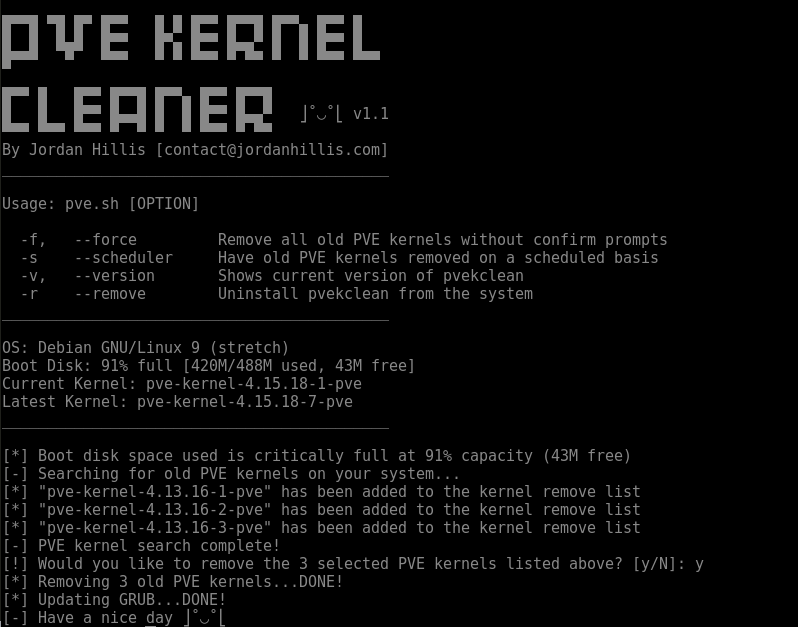
## Example Usage
|
||||
|
||||
|
||||

|
||||
|
||||
## Features
|
||||
|
||||
@@ -29,36 +29,54 @@ PVE Kernel Cleaner is a program to compliment Proxmox Virtual Environment which
|
||||
|
||||
## Latest Version
|
||||
|
||||
* v1.3
|
||||
* v2.0.2
|
||||
|
||||
## Prerequisites
|
||||
|
||||
Before using this program you will need to have the following packages installed.
|
||||
* cron
|
||||
* curl
|
||||
* git
|
||||
|
||||
To install all required packages enter the following command.
|
||||
|
||||
##### Debian:
|
||||
|
||||
```
|
||||
sudo apt-get install cron
|
||||
sudo apt-get install cron curl git
|
||||
```
|
||||
|
||||
## Installing
|
||||
|
||||
To install PVE Kernel Cleaner please enter the following commands
|
||||
You can install PVE Kernel Cleaner using either Git or Curl. Choose the method that suits you best:
|
||||
|
||||
```
|
||||
### Installation via Git
|
||||
|
||||
1. Open your terminal.
|
||||
|
||||
2. Enter the following commands one by one to install PVE Kernel Cleaner:
|
||||
|
||||
```bash
|
||||
git clone https://github.com/jordanhillis/pvekclean.git
|
||||
cd pvekclean
|
||||
chmod +x pvekclean.sh
|
||||
./pvekclean.sh
|
||||
```
|
||||
### Installation via Curl
|
||||
|
||||
1. Open your terminal.
|
||||
|
||||
2. Use the following command to install PVE Kernel Cleaner:
|
||||
|
||||
```bash
|
||||
curl -o pvekclean.sh https://raw.githubusercontent.com/jordanhillis/pvekclean/master/pvekclean.sh
|
||||
chmod +x pvekclean.sh
|
||||
./pvekclean.sh
|
||||
```
|
||||
|
||||
## Updating
|
||||
|
||||
To update PVE Kernel Cleaner please run the same commands as described in the "Installing" section.
|
||||
|
||||
PVE Kernel Cleaner checks for updates automatically when you run it. If an update is available, you'll be notified within the program. Simply follow the on-screen instructions to install the update, and you're all set with the latest version!
|
||||
|
||||
## Usage
|
||||
|
||||
@@ -71,31 +89,51 @@ Example of usage:
|
||||
-f, --force Force the removal of old PVE kernels without confirm prompts
|
||||
-rn, --remove-newer Remove kernels that are newer than the currently running kernel
|
||||
-s, --scheduler Have old PVE kernels removed on a scheduled basis
|
||||
-v, --version Shows current version of $program_name
|
||||
-r, --remove Uninstall $program_name from the system
|
||||
-d, --debug Run the program in debug mode for testing without making system changes
|
||||
-v, --version Shows current version of pvekclean
|
||||
-r, --remove Uninstall pvekclean from the system
|
||||
-i, --install Install pvekclean to the system
|
||||
-d, --dry-run Run the program in dry run mode for testing without making system changes
|
||||
|
||||
```
|
||||
|
||||
## Usage Examples:
|
||||
Here are some common ways to use PVE Kernel Cleaner:
|
||||
|
||||
**Remove Old Kernels Non-Interactively:**
|
||||
* **Remove Old Kernels Non-Interactively:**
|
||||
```bash
|
||||
pvekclean -f
|
||||
```
|
||||
**Set Number of Kernels to Keep:**
|
||||
<sub> This command removes old PVE kernels without requiring user confirmation.</sub>
|
||||
|
||||
* **Set Number of Kernels to Keep:**
|
||||
```bash
|
||||
pvekclean -k 3
|
||||
```
|
||||
**Force Remove Old Kernels While Keeping a Certain Number:**
|
||||
<sub>This command specifies the number of most recent PVE kernels to keep on the system.</sub>
|
||||
|
||||
* **Force Remove Old Kernels While Keeping a Certain Number:**
|
||||
```bash
|
||||
pvekclean -f -k 3
|
||||
```
|
||||
**Remove Newer Kernels and Keep a Specific Number:**
|
||||
<sub>This command forces the removal of old PVE kernels while retaining a specific number of the most recent ones.</sub>
|
||||
|
||||
* **Remove Newer Kernels and Keep a Specific Number:**
|
||||
```bash
|
||||
pvekclean -rn -k 2
|
||||
```
|
||||
<sub>This command removes newer PVE kernels and keeps a specified number of the most recent ones.</sub>
|
||||
|
||||
* **Schedule Regular Kernel Removal:**
|
||||
```bash
|
||||
pvekclean -s
|
||||
```
|
||||
<sub>This command sets up PVE Kernel Cleaner to remove old PVE kernels on a scheduled basis. You can configure the schedule according to your needs.</sub>
|
||||
|
||||
* **Perform a Dry Run without Making Changes:**
|
||||
```bash
|
||||
pvekclean -d
|
||||
```
|
||||
<sub>This command runs PVE Kernel Cleaner in dry run mode, simulating actions without actually removing any kernels or making changes to your system. It's useful for testing and understanding what the script would do.</sub>
|
||||
|
||||
## Developers
|
||||
|
||||
|
||||
@@ -0,0 +1 @@
|
||||
Asset files here only. Not intended for program use.
|
||||

Binary file not shown.
|
After Width: | Height: | Size: 17 KiB |

Binary file not shown.
|
After Width: | Height: | Size: 80 KiB |

Binary file not shown.
|
After Width: | Height: | Size: 77 KiB |

Binary file not shown.
|
After Width: | Height: | Size: 168 KiB |
+75
-31
@@ -36,8 +36,8 @@ boot_critical_percent="80"
|
||||
# To check for updates or not
|
||||
check_for_updates=true
|
||||
|
||||
# Debug mode is for testing without actually removing anything
|
||||
debug=false
|
||||
# Dry run mode is for testing without actually removing anything
|
||||
dry_run=false
|
||||
|
||||
# Current kernel
|
||||
current_kernel=$(uname -r)
|
||||
@@ -46,7 +46,7 @@ current_kernel=$(uname -r)
|
||||
program_name="pvekclean"
|
||||
|
||||
# Version
|
||||
version="1.3"
|
||||
version="2.0.2"
|
||||
|
||||
# Text Colors
|
||||
black="\e[38;2;0;0;0m"
|
||||
@@ -110,8 +110,26 @@ echo -e " ${bg_black}${orange} ${re
|
||||
${bg_orange}${black} ${bold}By Jordan Hillis [jordan@hillis.email] ${reset}
|
||||
___________________________________________
|
||||
"
|
||||
if [ "$debug" == "true" ]; then
|
||||
printf " ${bg_black}${orange}${bold} DEBUG MODE IS ${green}ON ${reset}\n\n"
|
||||
if [ "$dry_run" == "true" ]; then
|
||||
printf " ${bg_yellow}${black}${bold} DRY RUN MODE IS: ${red}ON ${reset}\n"
|
||||
printf "${bg_green}${bold}${black} This is what the script would do in regular mode ${reset}\n${bg_green}${bold}${black} (but without making actual changes) ${reset}\n\n"
|
||||
fi
|
||||
}
|
||||
|
||||
# Function to get drive status based on usage percentage
|
||||
get_drive_status() {
|
||||
local usage=$1
|
||||
# Check if the input is a number
|
||||
if ! [[ $usage =~ ^[0-9]+$ ]]; then
|
||||
echo "${bold}N/A${reset}"
|
||||
else
|
||||
if (( usage <= 50 )); then
|
||||
echo "${bold}${green}Healthy${reset}"
|
||||
elif (( usage > 50 && usage <= 75 )); then
|
||||
echo "${bold}${orange}Moderate Capacity${reset}"
|
||||
else
|
||||
echo "${bold}${red}Critically Full${reset}"
|
||||
fi
|
||||
fi
|
||||
}
|
||||
|
||||
@@ -119,6 +137,7 @@ fi
|
||||
kernel_info() {
|
||||
# Lastest kernel installed
|
||||
latest_kernel=$(dpkg --list | awk '/proxmox-kernel-.*-pve/{print $2}' | sed -n 's/proxmox-kernel-//p' | sort -V | tail -n 1 | tr -d '[:space:]')
|
||||
[ -z "$latest_kernel" ] && latest_kernel="N/A"
|
||||
# Show operating system used
|
||||
printf " ${bold}OS:${reset} $(cat /etc/os-release | grep "PRETTY_NAME" | sed 's/PRETTY_NAME=//g' | sed 's/["]//g' | awk '{print $0}')\n"
|
||||
# Get information about the /boot folder
|
||||
@@ -131,7 +150,7 @@ kernel_info() {
|
||||
if [[ "$current_kernel" == *"pve"* ]]; then
|
||||
# Check if we are running the latest kernel, if not warn
|
||||
if [[ "$latest_kernel" != *"$current_kernel"* ]]; then
|
||||
printf " ${bold}Latest Kernel:${reset} $latest_kernel\n"
|
||||
printf " ${bold}Latest Kernel:${reset} ${latest_kernel}\n"
|
||||
fi
|
||||
# Warn them that they aren't on a PVE kernel
|
||||
else
|
||||
@@ -165,7 +184,8 @@ show_usage() {
|
||||
printf " -s, --scheduler Have old PVE kernels removed on a scheduled basis\n"
|
||||
printf " -v, --version Shows current version of $program_name\n"
|
||||
printf " -r, --remove Uninstall $program_name from the system\n"
|
||||
printf " -d, --debug Run the program in debug mode for testing without making system changes\n"
|
||||
printf " -i, --install Install $program_name to the system\n"
|
||||
printf " -d, --dry-run Run the program in dry run mode for testing without making system changes\n"
|
||||
printf "___________________________________________\n\n"
|
||||
fi
|
||||
}
|
||||
@@ -239,6 +259,9 @@ scheduler() {
|
||||
# Installs PVE Kernel Cleaner for easier access
|
||||
install_program() {
|
||||
force_pvekclean_update=false
|
||||
local tmp_file="/tmp/.pvekclean_install_lock"
|
||||
local install=false
|
||||
local ask_interval=3600 # 1 hour in seconds
|
||||
# If pvekclean exists on the system
|
||||
if [ -e /usr/local/sbin/$program_name ]; then
|
||||
# Get current version of pvekclean
|
||||
@@ -250,12 +273,16 @@ install_program() {
|
||||
force_pvekclean_update=true
|
||||
fi
|
||||
fi
|
||||
# Check if the file doesn't exist or it's been over an hour since the last ask
|
||||
if [ ! -e "$tmp_file" ] || [ ! -f "$tmp_file" ] || [ $(( $(date +%s) - $(cat "$tmp_file") )) -gt $ask_interval ] || [ $force_pvekclean_update == true ] || [ -n "$force_pvekclean_install" ]; then
|
||||
# If pvekclean does not exist on the system or force_purge is enabled
|
||||
if [ ! -f /usr/local/sbin/$program_name ] || [ $force_pvekclean_update == true ]; then
|
||||
if [ ! -f /usr/local/sbin/$program_name ] || [ $force_pvekclean_update == true ] || [ -n "$force_pvekclean_install" ]; then
|
||||
# Ask user if we can install it to their system
|
||||
if [ $force_purge == true ]; then
|
||||
REPLY="n"
|
||||
else
|
||||
# Update the timestamp in the file to record the time of the last ask
|
||||
echo $(date +%s) > "$tmp_file"
|
||||
# Ask if we can install it
|
||||
printf "${bold}[-]${reset} Can we install PVE Kernel Cleaner to your /usr/local/sbin for easier access [y/N] "
|
||||
read -n 1 -r
|
||||
@@ -273,6 +300,10 @@ install_program() {
|
||||
exit 0
|
||||
fi
|
||||
fi
|
||||
fi
|
||||
if [ -n "$force_pvekclean_install" ]; then
|
||||
exit 0
|
||||
fi
|
||||
}
|
||||
|
||||
# Uninstall pvekclean from the system
|
||||
@@ -302,24 +333,21 @@ uninstall_program() {
|
||||
# PVE Kernel Clean main function
|
||||
pve_kernel_clean() {
|
||||
# Find all the PVE kernels on the system
|
||||
kernels=$(dpkg --list | grep -E '(pve-kernel|proxmox-kernel)-.*-pve' | awk '{print $2}' | sed -n 's/\(pve\|proxmox\)-kernel-\(.*\)/\2/p' | sort -V)
|
||||
kernels=$(dpkg --list | grep -E "(pve-kernel|proxmox-kernel)-[0-9].*" | grep -E "Kernel Image" | grep -vE "${latest_kernel%-pve}|series|transitional" | awk '{print $2}' | sed -n 's/\(pve\|proxmox\)-kernel-\(.*\)/\2/p' | sort -V)
|
||||
# List of kernels that will be removed (adds them as the script goes on)
|
||||
kernels_to_remove=()
|
||||
# Check the /boot used
|
||||
printf "${bold}[*]${reset} Boot disk space used is "
|
||||
# Warn user when the /boot is critically full
|
||||
if [[ "${boot_info[4]}" -ge "$boot_critical_percent" ]]; then
|
||||
printf "${bold}${orange}critically full${reset} "
|
||||
# Tell them if it is at an acceptable percentage
|
||||
else
|
||||
printf "${bold}${green}healthy${reset} "
|
||||
fi
|
||||
# Display percentage used and available space left
|
||||
printf "at ${boot_info[4]}%% capacity (${boot_info[3]} free)\n"
|
||||
# Boot drive status
|
||||
boot_drive_status=$(get_drive_status ${boot_info[4]})
|
||||
# Show space used, status and free space available
|
||||
printf "${bold}[*]${reset} Boot disk space used is ${bold}${boot_drive_status}${reset} at ${boot_info[4]}%% capacity (${boot_info[3]} free)\n"
|
||||
# For each kernel that was found via dpkg
|
||||
current_kernel_passed=false
|
||||
for kernel in $kernels
|
||||
do
|
||||
# Check if the kernel is already in the array
|
||||
if [[ " ${kernels_to_remove[@]} " =~ " $kernel " ]]; then
|
||||
continue # Skip adding it again
|
||||
fi
|
||||
# Only if not removing newer kernels and kernel matches the current kernel
|
||||
if [ "$(echo $kernel | grep "$current_kernel")" ]; then
|
||||
if [ "$remove_newer" == "false" ]; then
|
||||
@@ -334,9 +362,9 @@ pve_kernel_clean() {
|
||||
fi
|
||||
done
|
||||
# If remove_newer is set keep the last kernel installed as its newest
|
||||
if [ "$remove_newer" == "true" ] && [ "$current_kernel_passed" == "true" ] && [ ${#kernels_to_remove[@]} -gt 0 ]; then
|
||||
unset kernels_to_remove[-1]
|
||||
fi
|
||||
# if [ "$remove_newer" == "true" ] && [ "$current_kernel_passed" == "true" ] && [ ${#kernels_to_remove[@]} -gt 0 ]; then
|
||||
# unset kernels_to_remove[-1]
|
||||
# fi
|
||||
# If keep_kernels is set we remove this number from the array to remove
|
||||
if [[ -n "$keep_kernels" ]] && [[ "$keep_kernels" =~ ^[0-9]+$ ]]; then
|
||||
if [ $keep_kernels -gt 0 ]; then
|
||||
@@ -384,7 +412,7 @@ pve_kernel_clean() {
|
||||
do
|
||||
printf "${bold}[-]${reset} Removing kernel: $kernel..."
|
||||
# Purge the old kernels via apt and suppress output
|
||||
if [ "$debug" != "true" ]; then
|
||||
if [ "$dry_run" != "true" ]; then
|
||||
/usr/bin/apt purge -y pve-kernel-$kernel > /dev/null 2>&1
|
||||
/usr/bin/apt purge -y proxmox-kernel-$kernel > /dev/null 2>&1
|
||||
/usr/bin/apt purge -y pve-kernel-${kernel%-pve} > /dev/null 2>&1
|
||||
@@ -393,14 +421,18 @@ pve_kernel_clean() {
|
||||
/usr/bin/apt purge -y proxmox-headers-${kernel%-pve} > /dev/null 2>&1
|
||||
fi
|
||||
sleep 1
|
||||
printf "DONE!\n"
|
||||
printf "${bold}${green}DONE!${reset}\n"
|
||||
done
|
||||
printf "${bold}[*]${reset} Updating GRUB..."
|
||||
# Update grub after kernels are removed, suppress output
|
||||
if [ "$debug" != "true" ]; then
|
||||
if [ "$dry_run" != "true" ]; then
|
||||
/usr/sbin/update-grub > /dev/null 2>&1
|
||||
fi
|
||||
printf "DONE!\n"
|
||||
printf "${bold}${green}DONE!${reset}\n"
|
||||
# Get information about the /boot folder
|
||||
boot_info=($(echo $(df -Ph | grep /boot | tail -1) | sed 's/%//g'))
|
||||
# Show information about the /boot
|
||||
printf "${bold}[-]${reset} ${bold}Boot Disk:${reset} ${boot_info[4]}%% full [${boot_info[2]}/${boot_info[1]} used, ${boot_info[3]} free] \n"
|
||||
# Script finished successfully
|
||||
printf "${bold}[-]${reset} Have a nice $(timeGreeting) ⎦˚◡˚⎣\n"
|
||||
# User wishes to not remove the kernels above, exit
|
||||
@@ -415,12 +447,19 @@ pve_kernel_clean() {
|
||||
# Function to check for updates
|
||||
check_for_update() {
|
||||
if [ "$check_for_updates" == "true" ] && [ "$force_purge" == "false" ]; then
|
||||
local remote_version=$(curl -s -m 10 https://raw.githubusercontent.com/jordanhillis/pvekclean/master/version.txt || echo "")
|
||||
# Get latest version number
|
||||
local remote_version=$(curl -s -m 10 https://raw.githubusercontent.com/jordanhillis/pvekclean/master/version.txt | tr -d '\n' || echo "")
|
||||
# Unable to fetch remote version, so just skip the update check
|
||||
if [ -z "$remote_version" ]; then
|
||||
printf "${bold}[*]${reset} Failed to check for updates. Skipping update check.\n"
|
||||
return
|
||||
fi
|
||||
# Validate the remote_version format using a regex
|
||||
if [[ ! "$remote_version" =~ ^[0-9]+(\.[0-9]+)*$ ]]; then
|
||||
printf "${bold}[*]${reset} Invalid remote version format: ${bold}${orange}$remote_version${reset}. Skipping update check.\n"
|
||||
return
|
||||
fi
|
||||
# If version isn't the same
|
||||
if [ "$remote_version" != "$version" ]; then
|
||||
printf "*** A new version $remote_version is available! ***\n"
|
||||
printf "${bold}[*]${reset} Do you want to update? [y/N] "
|
||||
@@ -443,7 +482,7 @@ check_for_update() {
|
||||
}
|
||||
|
||||
timeGreeting() {
|
||||
h=$(date +%H)
|
||||
h=$(date +%k) # Use %k to get the hour as a decimal number (no leading zero)
|
||||
((h >= 5 && h < 12)) && echo "morning" && return
|
||||
((h >= 12 && h < 17)) && echo "afternoon" && return
|
||||
((h >= 17 && h < 21)) && echo "evening" && return
|
||||
@@ -467,6 +506,11 @@ main() {
|
||||
|
||||
while [[ $# -gt 0 ]]; do
|
||||
case "$1" in
|
||||
-i|--install )
|
||||
force_pvekclean_install=true
|
||||
main
|
||||
install_program
|
||||
;;
|
||||
-r|--remove )
|
||||
main
|
||||
uninstall_program
|
||||
@@ -502,8 +546,8 @@ while [[ $# -gt 0 ]]; do
|
||||
shift
|
||||
continue
|
||||
;;
|
||||
-d|--debug)
|
||||
debug=true
|
||||
-d|--dry-run)
|
||||
dry_run=true
|
||||
shift
|
||||
continue
|
||||
;;
|
||||
|
||||
+1
-1
@@ -1 +1 @@
|
||||
1.3
|
||||
2.0.2
|
||||
|
||||
Reference in New Issue
Block a user